
SENT is the Electronic Transport Supervision System. It is used to monitor the transport of certain goods within Poland or through Poland (in transit). It should be emphasized that SENT obligations do not apply to all shipments, but only to certain transports involving sensitive goods. The SENT system and the obligations associated with it should be distinguished from the RMPD requirements, which concern transports carried out by foreign carriers – more on this in the post about RMPD. SENT Transport Penalties in Poland.
Who is subject to SENT
SENT imposes a number of obligations on consignors of goods, their recipients, and carriers. SENT obligations apply to:
- consignors of goods
- recipients of goods
- carriers
- drivers
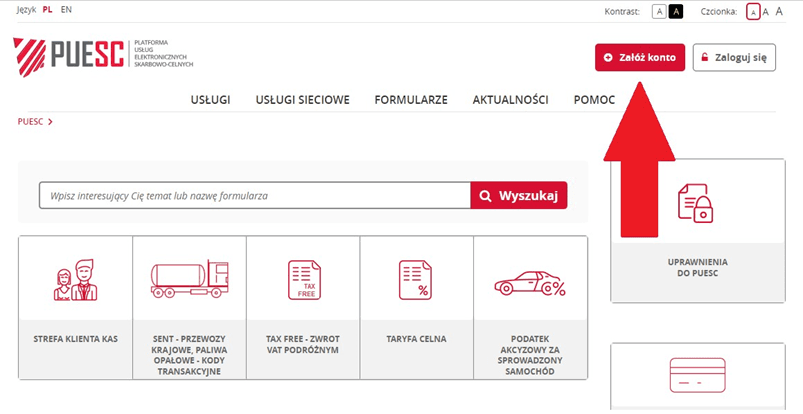
Platform PUESC
The SENT system and SENT notifications are handled on the Polish tax administration’s platform – PUESC.
Goods – CN
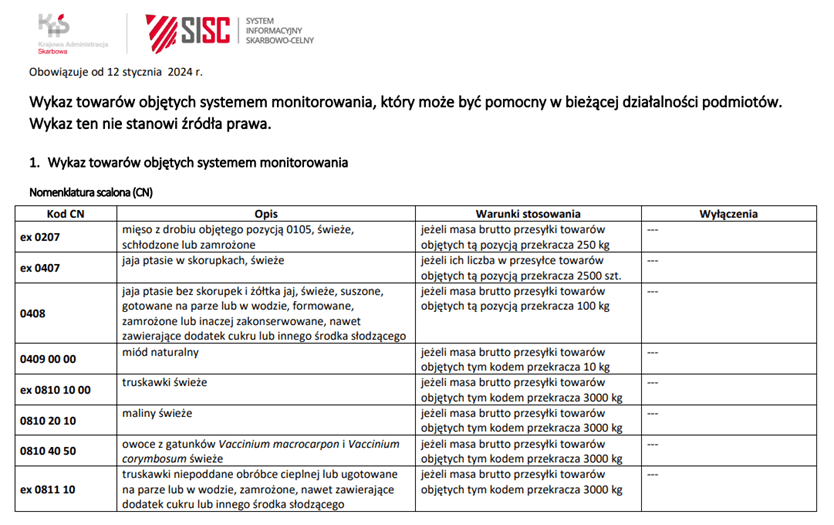
The transport of goods covered by specific positions of the Combined Nomenclature (CN) listed in the Act and in the regulation (see Article 3 of the SENT Act) is subject to the transport and trade monitoring system.
- fuels
- oils
- gas
- alcohol
- lubricants
- tobacco leaves
- cigarette paper
- waste
- agricultural and food products (selected)
- medicinal products (in certain cases)
- foods for special dietary use (in certain cases)
- medical devices (in certain cases)
The list of goods subject to monitoring changes over time. List of goods covered by SENT is also published in summary form on the PUESC website. It is important to always consult the most up-to-date list, which should be dated. However, as the tax administration itself notes, the prepared list does not constitute a source of law (it is for informational purposes only). Therefore, in case of doubt, the provisions of the Act and the regulation are decisive.
These goods are not always subject to monitoring in the SENT system – the Act, as well as the regulations issued under it, contain a number of exceptions of varying scope. Therefore, in order to determine whether a given good is subject to SENT monitoring, it is often necessary to consult the Act and the regulation.
The basic SENT obligations include:
- submitting a SENT registration before the start of transport.
- obtaining a reference number for this registration.
- monitoring the transport via GPS along the entire route and transmitting the vehicle’s location data (together with the goods) to the PUESC system. IMPORTANT, the GPS transmitter must be activated before the start of transport.
- Presenting the vehicle for inspection if a control directive is issued – IMPORTANT.
These obligations may vary depending on whether the registration is made by the consignor, the recipient, or the carrier. If the registration is made by the consignor or the recipient, the carrier must complete it. Each of these entities is liable for violations in this area.
You can read more about SENT obligations on the official website of the tax administration or in the articles on our website www.prawnicytransportu.pl. The articles are in Polish, but you can use automatic website translation.
Remember that if any data in the registration changes, you are obliged to update the registration. If the date of entry into or exit from Poland, the date of loading or unloading, or the place of entry or exit changes, this must be reported. Failure to update may result in a fine of PLN 10,000.
CONTROL DIRECTIVE
(summons for inspection)
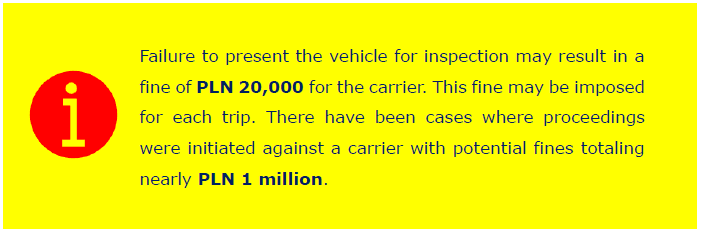
The SENT Act provides for the so-called control directive. This is the obligation of the carrier to present the means of transport together with the goods covered by the SENT registration for inspection (Article 12a of the SENT Act – summons for inspection). Failure to comply with this obligation may result in a fine of PLN 20,000. Such a fine may be imposed for each registered trip that was not inspected.
If the carrier receives a summons for inspection, they are required to contact by phone the Customs and Tax Office (UCS) indicated in the summons and inform them about the planned delivery of the goods, as well as present the means of transport together with the goods for inspection on the date the transport is completed.
The summons is sent in the SENT system together with the reference number or the confirmation of data update. Therefore, care should be taken not to overlook it. Below we present what a control directive looks like.
Be careful, as the summons may end up in your SPAM folder. After each registration, check your email.
SENT transport penalties
The provisions of the SENT Act provide not only for numerous obligations imposed on carriers and other entities involved in the transport of so-called sensitive goods, but also for high and difficult-to-avoid financial penalties for violations of these obligations – even if committed unintentionally and without fault. For such liability, it is of little importance whether any irregularities had any impact on the correctness of the trade or not.
Examples of fines
Financial penalties apply not only to those trips that were inspected during so-called roadside checks, but also to trips recorded in the SENT registration system where deficiencies were identified after reviewing the register. It is easy to imagine the consequences of an error that was repeated in a large number of registrations and discovered during such a review. It is not uncommon for carriers to face, for example, 50 proceedings concerning penalties of PLN 10,000 each – meaning total potential fines of PLN 500,000. Similarly, in the case of multiple failures to appear for inspection, there may be, for example, 40 proceedings for penalties of PLN 20,000 each – resulting in total potential fines of as much as PLN 800,000. Notices initiating proceedings often arrive many months, if not years, after the irregularity occurred, which makes it even harder to correct potential errors and leads to the repeated occurrence of the same violations by unaware entrepreneurs.
Read more…
You can read on our website about whether it is possible to avoid a fine for SENT errors and what the procedure looks like.